
Read: Key points in Module 2
The Pervasive Influence of AI: Smartphones, Entertainment, Social Media, Shopping, Banking, and Healthcare
This document explores the transformative impact of Artificial Intelligence (AI) across various sectors of modern life. From enhancing the functionality of our smartphones to revolutionizing entertainment, social media, shopping, banking, and healthcare, AI is rapidly reshaping how we interact with the world. This document will delve into specific applications, benefits, and potential challenges associated with AI integration in each of these domains.
AI in Smartphones
Smartphones have become indispensable tools, and AI is a key driver behind their increasing capabilities. AI algorithms power a multitude of features, enhancing user experience and productivity.
Voice Assistants: AI-powered voice assistants like Siri, Google Assistant, and Alexa are integrated into smartphones, enabling users to perform tasks hands-free. They can answer questions, set reminders, make calls, play music, and control smart home devices.
Image Recognition: AI algorithms enable smartphones to recognize objects, scenes, and faces in photos. This technology is used for image search, automatic tagging, and facial recognition for unlocking devices.
Predictive Text and Autocorrection: AI algorithms analyze user typing patterns to predict the next word and correct spelling errors, making typing faster and more accurate.
Battery Optimization: AI algorithms learn user usage patterns to optimize battery consumption by adjusting screen brightness, closing unused apps, and managing background processes.
Camera Enhancements: AI algorithms enhance camera performance by automatically adjusting settings, improving image quality, and enabling features like portrait mode and scene detection.
AI in Entertainment & Social Media
AI is transforming the entertainment and social media landscape, creating personalized experiences and enhancing content creation.
Recommendation Systems: AI algorithms analyze user preferences and viewing history to recommend movies, TV shows, music, and other content. This personalization enhances user engagement and discovery.
Content Moderation: AI algorithms are used to detect and remove inappropriate content, such as hate speech, violence, and spam, from social media platforms. This helps create a safer and more positive online environment.
Personalized Advertising: AI algorithms analyze user data to deliver targeted advertisements that are more relevant to their interests. This increases the effectiveness of advertising campaigns and improves user experience.
Content Generation: AI algorithms can generate text, images, and music, enabling creators to produce content more efficiently and explore new creative possibilities.
Enhanced Gaming Experiences: AI is used to create more realistic and challenging game environments, improve character behavior, and personalize gameplay experiences.
AI in Shopping & Banking
AI is revolutionizing the shopping and banking industries, providing personalized services, enhancing security, and streamlining operations.
Personalized Recommendations: AI algorithms analyze customer data to recommend products and services that are tailored to their individual needs and preferences. This increases sales and improves customer satisfaction.
Fraud Detection: AI algorithms analyze transaction data to detect and prevent fraudulent activities, protecting customers and financial institutions from losses.
Chatbots and Virtual Assistants: AI-powered chatbots and virtual assistants provide customers with instant support and assistance, answering questions, resolving issues, and guiding them through transactions.
Price Optimization: AI algorithms analyze market data and customer behavior to optimize pricing strategies, maximizing revenue and profitability.
Automated Customer Service: AI algorithms automate routine customer service tasks, such as answering frequently asked questions and processing returns, freeing up human agents to handle more complex issues.
Risk Assessment: AI algorithms analyze financial data to assess credit risk and make lending decisions, improving the accuracy and efficiency of the lending process.
AI in Healthcare
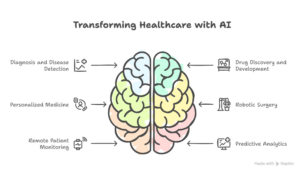
AI is transforming healthcare, improving diagnosis, treatment, and patient care.
Diagnosis and Disease Detection: AI algorithms analyze medical images, such as X-rays and MRIs, to detect diseases and abnormalities with greater accuracy and speed than human radiologists.
Drug Discovery and Development: AI algorithms accelerate the drug discovery process by analyzing vast amounts of data to identify potential drug candidates and predict their effectiveness.
Personalized Medicine: AI algorithms analyze patient data to develop personalized treatment plans that are tailored to their individual needs and genetic makeup.
Robotic Surgery: AI-powered robots assist surgeons in performing complex procedures with greater precision and control, reducing the risk of complications and improving patient outcomes.
Remote Patient Monitoring: AI-powered devices monitor patients’ vital signs and health data remotely, enabling healthcare providers to detect potential problems early and intervene proactively.
Predictive Analytics: AI algorithms analyze patient data to predict the likelihood of future health events, such as hospital readmissions and disease outbreaks, enabling healthcare providers to take preventive measures.
In conclusion, AI is rapidly transforming various aspects of our lives, from the devices we use daily to the industries that shape our economy. While AI offers numerous benefits, it is important to address the ethical and societal implications of its widespread adoption, including issues related to data privacy, bias, and job displacement. By carefully considering these challenges and implementing appropriate safeguards, we can harness the power of AI to create a more efficient, equitable, and prosperous future.